
This article will explore why workplace health isn’t always logical or instant, and how occupational health professionals can help you navigate these challenges to protect your employees and your business.
Decoding the Chaos Of Health Effects
So, managers are scratching their heads, peering at their workforce like baffled mathematicians staring at a rogue equation.
“Why,” they cry, “is this whole ‘health’ thing so… squishy? Illogical. Difficult. They’re expecting a neat ‘1+1= 2’ kind of answer. But surprise! Humans aren’t algorithms.
Turns out, we’re messy. We react to workplace gremlins like stress, noise, or tainted air in different ways. It’s not an on and off light switch; it’s more like a dimmer switch, each effect and tolerance controlled by a personality, a mood or even the weather. Each of our reactions are a unique combination of complexity, delay, and past history (to name but three.)
It’s not ‘bad desk = instant back pain.’ It’s ‘bad desk + weird sleeping habits + trying to lift that piano to find an errant pound coin = potential back pain in six months, maybe.
So who can help you figure it out. Is it them or the work? Occupational health wizards can help. They’re the ones who can look at the human, take loads of things into consideration and suggest the way forward, helping businesses protect their most vulnerable and important assets.
 But to truly understand the health enigma, we need to consider three chaotic concepts: complexity, delay and variability.
1. Complexity: Why Health Isn’t a Straight Line
Have you ever met a lifelong smoker who’s outlived their doctor? Or someone who uses a sunbed every day except Sundays and never a hint of a rampant mole? These people destroy neat health equations. Because health isn’t a simple ’cause and effect’ game. It’s a cocktail of age, genes, habits, background, and a lot of other things. Trying to predict someone’s health outcome is like trying to predict the weather in snow globe.
One day we might narrow down the chances of ill health occurring in everyone, crunching all the variables into a personalised risk score. Until then, we’re stuck with statistical averages, which, let’s face it, are always going to be overshadowed by the outliers – the folks who smoke and grow old and defy the odds.
2. The Delayed Reaction: Health’s Slow-Motion Results
We all understand safety issues: Wet floor equals slippy. A broken leg or ankle or bruised bum – instant effect. Health issues? No clue. It’s more like planting a seed and waiting for the tree to grow… or in this case, for the health problems to blossom.
Take asbestos: workers (and their families) were exposed in the ’60s and ’70s, and we’re still dealing with the fallout today. If every asbestos worker had instantly turned into a coughing, wheezing mess, things would’ve changed fast. But the delayed effects meant years of denial and inaction and of even linking the two things.
Thankfully, we’ve learnt. Regulations like COSHH and RIDDOR are our weapons against these slow-motion health disasters, forcing us to take preventative action before the damage is done.
3. Human Variability. Why Logic Doesn’t Apply
“Why does one person bounce back from a heart attack like a rubber ball, while another takes a week off for a sniffle? Because humans are unique. Our perceptions of health, our beliefs, and even our unconscious biases play a huge role in how we react to illness. Take the ‘placebo effect,’ or the ‘secondary gain’ of being sick (like when you’re suing your Company and suddenly your back pain is really bad.) Consider other issues like cultural and ethnic differences, from macho ‘tough it out’ cultures (construction) to more nurturing environments (office work, banking.)
I’ve seen foundry workers shrugging off extreme heat, assembly line workers enduring mind-numbing repetition, and city bankers collapsing under the weight of stress. Each group has its own weird and wonderful expected and tolerated health issues. But humans are adaptable. They either adjust to the environment or find a better one. But understanding these quirks is where occupational health professionals shine. They’re the translators, bridging the gap between humans (physical, mental, emotional) and workplace practicality.
 Occupational Health Professionals: The Workplace Health Whisperers
While managers grapple with the chaos of the workplace organisation and productivity – occupational health professional are there to help with the health aspects. They understand the complexity, the delays, and human susceptibilities and limits. They’re the ones who can balance business needs (and the law) with worker wellbeing.
Until we crack the code to predicting perfect health, these professionals can guide managers, helping business to navigate the complex reality of keeping people healthy and productive.
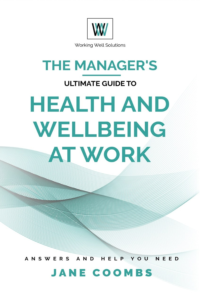
For more in depth information about the secrets of workplace health, check out my book: A Manager’s Ultimate Guide to Occupational Health and Wellbeing at Work or to read more about my work, subscribe to my Substack account – it’s free and covers many subjects.


