
Engaging an Occupational Health Service
So, you’ve decided you need a new or different occupational health (OH) service, for your organisation. See my checklist and guide to choosing the perfect OH fit. And quickly recap the types of OH service available.
To see lists of industry standard accredited OH services, go to SEQOHS (Safe Effective Quality Occupational Health Services) website. This is an accreditation scheme for occupational health service providers and is recommended by the UK government to ensure consistency and compliance in occupational health service provision. It’s supported by the Faculty of Occupational Medicine. The SEQOHS site contains a list of all the accredited OH services in the UK. There are other professional lists where you can find suitably competent individuals to undertake a review, e.g. OSCHR, BOHS services or perhaps from word of mouth.
Who to Choose
Choose 3 – 5 OH service reviewers from the lists on the sites above, bearing in mind the process you will follow and size of your company.
Consider telephoning each OH reviewer for a preliminary discussion, setting out what you are looking for and whether they have the expertise, resources and inclination to be invited to tender, you may pick up some hints on how to be more specific in the actual invitation to tender document.
For those without a current OH service, I have developed a short questionnaire (free download) with a process of review within the questions.
When you have your preferred bidders send the tender document to them or follow legal guidelines if applicable[1].
The process
The process of review of OH services will contain important steps usually:
- The objectives of the review (cut costs, evidence based, better delivery etc)
- The timeframes for delivery
- Signposts for delivery, what is delivered when and how
- Recommendations with costing
- Staffing levels for any new service
- Model of delivery e.g. in-house service, contracted services, hybrid model
- Projections for future service
- Terms and conditions for payment
- Attendance on site days for workshops, interviews, presentations, etc
Specify a date when the tenders should be returned and the option to ask questions if anything is unclear (answers will be sent to all potential bidders). This ensures transparency and gets you the best process for choosing the OH reviewer.
If you have a procurement team, then they will advise your company on the way to do this or best practice for your company.
Coordinator
If you’re having a thorough review and the reviewer requests interviews with specific people, you will need a liaison or coordinator for the review, for example, to book rooms, setting up interviews, checking on progress and trouble-shooting.
Again, procurement usually takes this role in large companies.
Co-operation and priority for the review is important. This type of project can easily get put on the “I’ll do it later pile”; so an email from senior management or, even better, the Chief Executive will work wonders for co-operation of busy managers. Without managers input, the final recommendations may be academic rather than meaningful, and resources wasted.
The email from the CEO will also show the importance of the subject and help with the recommendations after…
Review of tenders
When the completed tenders are received, they’ll need reviewing scientifically, that is, more quantitative (scoring) than qualitative (personal feeling), because of the misconceptions about how OH should be delivered. This is where a workshop prior to the actual review can be helpful. A system of points for elements of service can be agreed early on for scoring the bids. For many companies now, managers must justify why and how they chose a certain service; fairness and transparency are key issues.
I know this will vary from company to company, but I have mostly used five categories of scoring:
- Has met none of the objectives
- Met some of the objectives
- Met all objectives
- Over delivered on objectives
- Gone beyond the objectives and aims to deliver a comprehensive response
Also considered is the cost, or cost savings, of each recommendation made. Companies will have their own view of how cost (quality versus quantity) impacts on awarding contracts. Many go with the lowest price. But that is not always the best way forward for health services and one would look at the quality of the processes described too (e.g. response time, reports, IT services, economies of scale, facilities) for a full picture.
You need to decide what is important to you, your workers and your work, when scoring the responses.
The higher the score on each objective the better the answer. Adding up the scores will give a comparator, and bids can be ranked in order of acceptability to you.
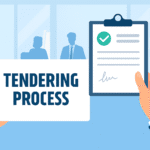 Scoring The Tenders for Perfect Occupational Health Service
For best results, it’s important that there are several reviewers of tenders and that they work independently of each other. Remember, the loudest voice or the most senior manager may not have much insight into OH services. And it’s sometimes difficult to argue against these.
Each reviewer takes away a scoring card and sets a score using their professional skills against each aim. Hopefully, everyone will come to the same conclusion and there will be an outright winner. However, with health, it is difficult to achieve; people have different expectations of what is appropriate in terms of occupational health provision in the workplace.
This is where the importance of an initial workshop comes into play, making sure everyone understands what occupational health is all about. And this serves several purposes; not only does it give scorers and stakeholders tools to critically analyse the tenders, but it also improves the overall understanding of occupational health and influences good OH in the company in the future. For example, many believe occupational health is about health and well-being (checking blood pressures and measuring cholesterol, for example); but it’s not really. So it’s important that this is described as non-essential occupational health work, and already available on the NHS. Without understanding of OH in the workplace, the scoring could be skewed and irrelevant.
Decision
If there are two or even three bidders who are close in terms of quality and price, ask these to present their findings to key stakeholders before making a final decision.
The winning tender bid will be asked to go ahead with the OH review/investigation.
The Review/Investigation
To get a full picture of what’s happening across the whole company (and especially in multi-national and cost centred companies) try any or all of the following:
- Workshops where occupational health services, and requirements are discussed and analysed. The first part of the workshop needs to explore what OH is so that the outcome is realistic, and people understand what occupational health is before making recommendations. The second part would be based on your company’s needs and requirements
- A list of key stakeholders (important people) in the company for interview, and could include
- Managers
- Directors
- Finance
- HR
- Safety
- The current occupational health provider
- Trade unions
- Health risk profile of work undertaken
- Relevant health legislation to your work, e.g. COSHH. Asbestos, Noise
- Site visits
- Review of current services, quality and costs
- Review of policies and procedures
- Review of integration
- How OH is co-ordinated and consistency across the business
- Value for money
- History of occupational disease, absence, accidents and incidents linked to health – prioritise what is most important in your company
Results from the Review
The final report should contain the information you require and have an executive summary setting out at least 3 options for your OH provision:
- The “do nothing” option (leave things as they are) – pros and cons
- Preferred option and why this is the best way forward for your company
- An option (or options) that addresses the pros and cons of issues arising in 1 and 2 above, or considers another approach entirely
 Conclusion
From the final OH review, with recommendations and options, you will have completed the process of engaging the right occupational health service for your business. And, most importantly, from the workshops, interviews and the process itself, you will have increased awareness and understanding of occupational health issues in your company.
[1] The outline of procurement for Government projects: click here
If you want more advice and insights into OH – read the Manager’s Guide to Health and Wellbeing at Work
Or, if you want some help with deciding, contact me for more advice via my Substack pages.


