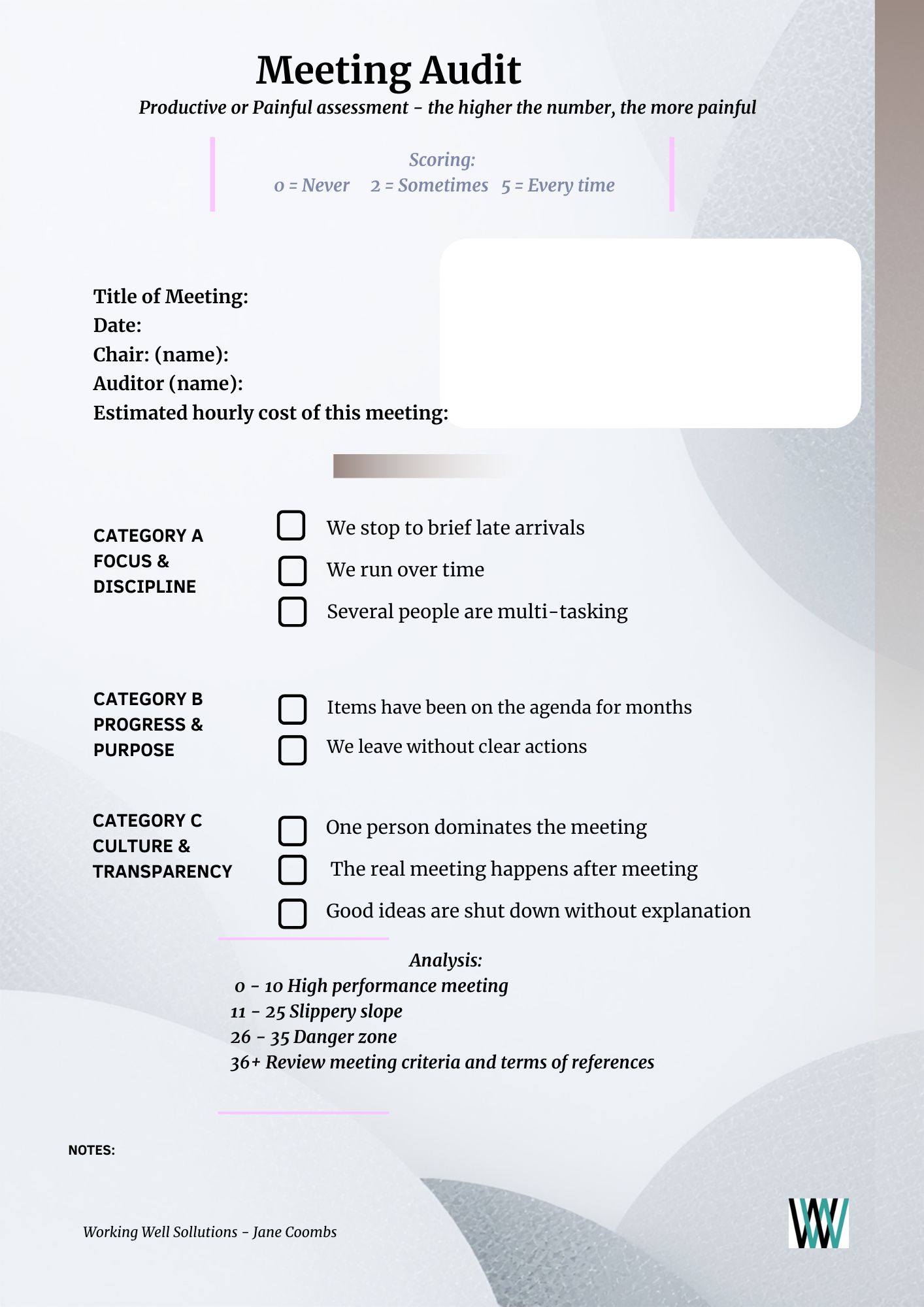
In Part 1, we calculated the high price of meeting time. But cost is only half the story. Today, we’re auditing the quality of the Work Meeting to separate the productive from the painful.
Introduction
We have all been there: ambushed by a senior manager for a ‘quick catch up’ that turns into a ninety-minute headache with you being unprepared and scrabbling for information, with everyone else in the meeting checking their emails. Or the meeting where the most important decisions are made by two people whispering in the corridor afterward. Bad meetings are more than annoying – waiting for an agenda item for half an hour only to be a quick one sentence summary, then everyone moving on leaving you frustrated and feeling hard done by. But yes, they are draining, and also, a drain on your organisation’s most expensive resource—time. I always need a reset after a bad experience.
Case Study: Postponed
The worse experience was having prepared a report for a huge team of senior management on MS Teams. I’d been up half the night tidying it and the rest of the night practising my part. My heart beat so hard as we got to my bit of the agenda. Here we go…
“I’m afraid we’re running late and I really need to pick up on the next agenda item. Jane can we do your piece next month? Or perhaps you could send through your notes via email?” the chair said.
Spitting feathers I agreed with a forced smile.
Audit Your Meeting
Often too, we sense a meeting is failing, but we can’t figure out why. Well, why don’t you audit your meeting in situ? Observe and note the issues. Collect the evidence. Don’t leave feeling drained and frustrated. It’s not your fault.
I have designed an audit tool to turn that ‘gut feeling’ into data. By estimating the cost of the meeting using the Meeting Cost Calculator, and tracking these specific behaviours, you can identify exactly where the ‘slow leak’ is happening and provide the evidence needed to change maybe the next meeting and hopefully company culture.
Click here to download your own Meeting Audit Sheet.
Auditing your meetings is the first step; fixing them is the next. In the final part of this series, I’m providing a ‘Terms of Reference‘ template to ensure every meeting you keep has a clear purpose and professional structure.
If your audit uncovers a problem, you need to review the set up and maybe review the terms of reference (Part 3) to get the meeting back on the right track.
This series of posts will be included in my new book: Worklife Services (working title.) Watch out for new titbits and tips as my research progresses. Or why not join my Substack for hot news and background on progress.
The Work Meetings Series:
- Part 1: The Hidden Cost (with Calculator)
- Part 2: Productive or Painful? (with Audit Sheet)
- Part 3: Setting the Standard (with Terms of Reference)